Understanding opposites is one of the fastest ways to sharpen your language skills.
When you know not only what a word means but also what it does not mean, your writing becomes more precise, expressive, and flexible.
Antonyms act like contrast tools—they help highlight ideas, create balance, and improve clarity in both creative and formal communication.
In academic and professional contexts, using accurate opposites can strengthen arguments, refine descriptions, and avoid ambiguity.
Whether you’re writing essays, reports, or engaging content, mastering antonyms enhances your ability to communicate nuance.
This guide focuses on texture antonyms, giving you a deep understanding of contrasting surface qualities and descriptive language.
What Does “Texture” Mean?
Texture refers to the physical feel, appearance, or consistency of a surface or material. It can describe how something feels to the touch—such as rough, smooth, soft, or hard—or how it appears visually.
From a linguistic perspective, texture also extends metaphorically. For example, writing can have a “smooth texture” (easy to read) or a “rough texture” (awkward or complex).
Tone Explanation
The word “texture” carries a neutral tone. It can be used in scientific, artistic, and everyday contexts without emotional bias.
Emotional or Action Intensity
Texture itself has low emotional intensity, but the adjectives associated with it (like “gritty” or “silky”) can carry stronger sensory or emotional weight.
22+ Best Antonyms for “Texture”
Smoothness
Meaning: Even, flat, without irregularities
Tone: Neutral / Formal
Example: The table had a smoothness that reflected the light beautifully.
Why Opposite: Texture often implies variation, while smoothness suggests uniformity.
Flatness
Meaning: Lacking depth or variation
Tone: Academic
Example: The painting lacked depth and appeared flatness dominated.
Why Opposite: Texture introduces dimension; flatness removes it.
Uniformity
Meaning: Consistent and unchanging
Tone: Formal
Example: The fabric showed uniformity throughout.
Why Opposite: Texture often involves irregularity; uniformity eliminates it.
Evenness
Meaning: Balanced and level
Tone: Neutral
Example: The surface had perfect evenness.
Why Opposite: Texture implies uneven qualities.
Polished Surface
Meaning: Refined and glossy
Tone: Formal
Example: The marble had a polished surface.
Why Opposite: Texture often suggests rawness; polish removes that.
Sleekness
Meaning: Smooth and glossy appearance
Tone: Informal / Descriptive
Example: The car’s sleekness impressed everyone.
Why Opposite: Texture implies tactile detail; sleekness minimizes it.
Softness
Meaning: Gentle and smooth feel
Tone: Emotional
Example: The softness of the fabric was comforting.
Why Opposite: Texture may imply roughness or complexity.
Plainness
Meaning: Simple and without detail
Tone: Neutral
Example: The wall’s plainness made it boring.
Why Opposite: Texture adds detail; plainness removes it.
Simplicity
Meaning: Lack of complexity
Tone: Academic
Example: The design focused on simplicity.
Why Opposite: Texture often introduces complexity.
Clarity
Meaning: Clear and easy to understand
Tone: Formal
Example: The text had clarity and flow.
Why Opposite: Texture in writing may imply density or layering.
Smooth Finish
Meaning: Perfectly refined surface
Tone: Technical
Example: The wood had a smooth finish.
Why Opposite: Texture implies irregularities.
Glossiness
Meaning: Shiny and reflective
Tone: Neutral
Example: The glossiness of the paint stood out.
Why Opposite: Texture often reduces shine.
Silkiness
Meaning: Extremely smooth feel
Tone: Emotional
Example: Her hair had a silkiness to it.
Why Opposite: Texture suggests tactile variation.
Refinement
Meaning: Improved and polished quality
Tone: Formal
Example: The sculpture showed refinement.
Why Opposite: Texture can imply rawness.
Cleanliness
Meaning: Free from irregularities or dirt
Tone: Neutral
Example: The surface had remarkable cleanliness.
Why Opposite: Texture may involve grit or roughness.
Precision
Meaning: Exactness and accuracy
Tone: Academic
Example: The design reflected precision.
Why Opposite: Texture may introduce randomness.
Orderliness
Meaning: Organized and neat
Tone: Formal
Example: The layout showed orderliness.
Why Opposite: Texture often involves irregular patterns.
Simplicity of Surface
Meaning: Basic and unvaried
Tone: Academic
Example: The simplicity of the surface reduced interest.
Why Opposite: Texture enhances interest.
Minimalism
Meaning: Extreme simplicity
Tone: Modern / Academic
Example: The room embraced minimalism.
Why Opposite: Texture adds richness.
Smooth Structure
Meaning: Seamless composition
Tone: Technical
Example: The material had a smooth structure.
Why Opposite: Texture implies layered complexity.
Uniform Surface
Meaning: Same throughout
Tone: Formal
Example: The uniform surface lacked detail.
Why Opposite: Texture thrives on variation.
Consistency
Meaning: Stable and unchanging
Tone: Neutral
Example: The mixture had consistency.
Why Opposite: Texture involves diversity.
Strong vs Mild Opposites
Not all antonyms carry the same intensity. Some directly oppose texture, while others only partially contrast it.
Strong opposites eliminate texture entirely:
- Smoothness
- Flatness
- Uniformity
These words directly counter the idea of variation or tactile detail.
Mild opposites reduce texture but don’t remove it:
- Softness
- Simplicity
- Cleanliness
These suggest a lower degree of texture rather than a complete absence.
Understanding this scale helps you choose the right word depending on how strong a contrast you want to create.
Context-Based Opposites
The opposite of “texture” can change depending on context:
- Art: Texture vs smoothness
- Writing: Texture vs clarity or simplicity
- Food: Texture vs consistency
- Design: Texture vs minimalism
For example, in food, “texture” might refer to crunchiness, while its opposite could be “smooth consistency.” In writing, a “textured narrative” might be contrasted with “clean and simple prose.”
Common Mistakes When Using Opposites
Confusing Texture with Material
Incorrect: “Metal is the opposite of texture.”
Correct: “Smooth metal lacks texture.”
Using Weak Contrasts
Incorrect: “Soft is the opposite of texture.”
Softness is only a partial opposite.
Ignoring Context
Incorrect: Using “clarity” as a physical opposite
Correct: Use context-appropriate antonyms.
Overgeneralization
Texture has many meanings; one antonym doesn’t fit all.
Sentence Transformation Examples
Original: The wall had a rough texture.
Rewritten: The wall had a smooth surface.
Original: The fabric felt textured and uneven.
Rewritten: The fabric felt silky and uniform.
Original: His writing has a dense texture.
Rewritten: His writing is clear and simple.
Original: The painting shows heavy texture.
Rewritten: The painting appears flat and minimal.
Original: The bread has a coarse texture.
Rewritten: The bread has a soft consistency.
FAQs
What is the simplest antonym for texture?
Smoothness is the most direct and commonly used antonym.
Can texture have multiple opposites?
Yes, depending on context—smoothness, uniformity, or simplicity.
Is “soft” an antonym of texture?
Partially. It reduces texture but doesn’t eliminate it.
What is the opposite of texture in writing?
Clarity or simplicity.
Are texture antonyms always physical?
No, they can be metaphorical as well.
Why are antonyms important in vocabulary building?
They improve understanding, contrast, and expression.
Can one word fully replace texture?
No single antonym fits all contexts.
Conclusion
Mastering texture antonyms gives you a powerful advantage in both descriptive and analytical writing.
By understanding how texture contrasts with smoothness, uniformity, and simplicity, you gain better control over language and meaning.
The key is context—choosing the right opposite based on the situation.
With practice, these antonyms will help you write with greater clarity, precision, and impact.
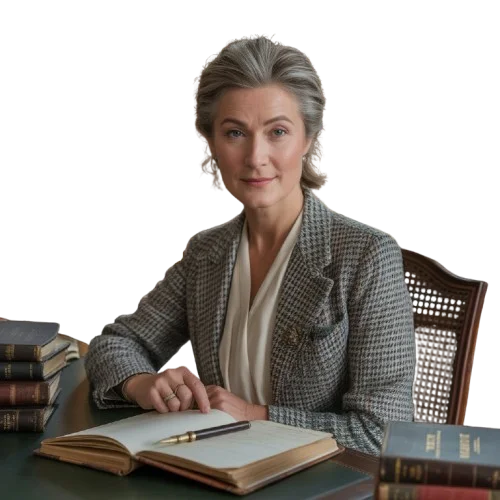
Sophia Taylor is an English language expert dedicated to helping learners improve their vocabulary with simple and effective antonyms.